
Coding for kids is quickly becoming one of the most underrated academic tools available today. Most parents assume it’s just a screen-time activity, something fun but separate from “real” schoolwork. That assumption misses the point entirely.
The truth is simpler and more powerful. Coding teaches kids how to think, how to solve problems, and how to stay focused under pressure, not only how to build apps or games. These are the exact skills that show up in a math test, a science project, or a tricky homework assignment. So the real question isn’t whether your child should learn to code. It’s how soon they should start.
Coding Is More Than Just Technology
It’s easy to see coding as a technical skill, similar to learning software or memorising syntax. However, that view sells the subject short.
Coding works more like a thinking exercise disguised as play. Every project asks a child to plan, test, and adjust their approach. As a result, they build habits of mind that stretch well beyond the computer screen. This is where the real academic value begins.
How Coding for Kids Trains the Brain to Think Logically
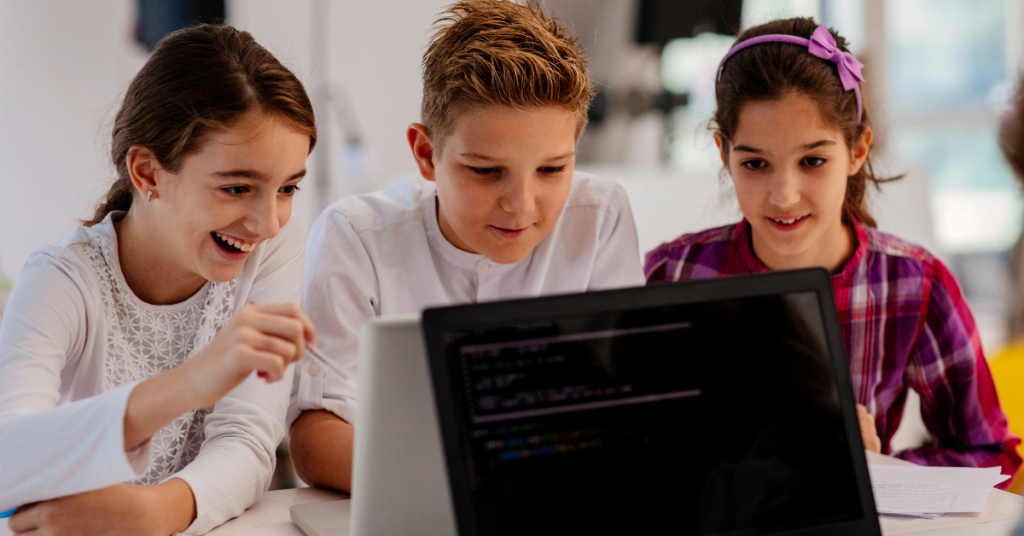
Logical thinking sits at the centre of every coding project. A child can’t simply guess their way to a working program. Instead, they must break a big goal into smaller, manageable steps.
Math: Breaking Problems Into Smaller Steps
Consider a child trying to build a simple animation. First, they decide what should happen. Then, they sequence each action in the right order. This is the same process used to solve a multi-step math problem. In fact, many teachers report that coding students approach word problems with more confidence. They’ve already practised breaking big questions into smaller ones.
Science: Testing Ideas Like a Scientist
Science asks students to form a hypothesis, test it, and adjust based on results. Coding follows an identical pattern. A child writes a line of code, runs it, and checks what happens. When it doesn’t work, they don’t panic. Instead, they treat the outcome as information, not failure. That mindset mirrors exactly how real scientists approach experiments.
Read also: Holiday Screen Addiction: 3 Ways to Take Back Your Child’s Break
Why Coding for Kids Builds Focus and Patience
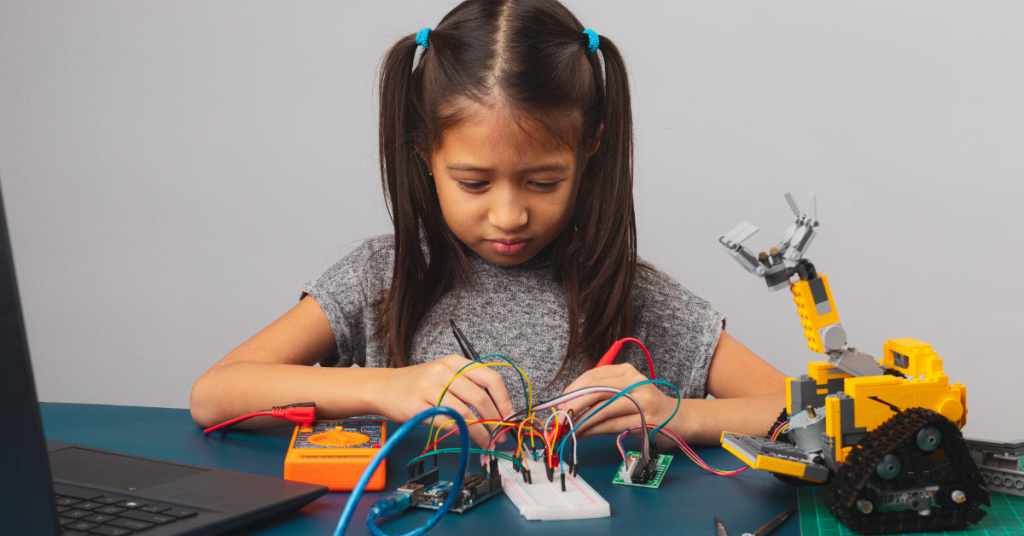
Beyond logic, coding teaches something schools rarely test directly: patience. A program rarely works perfectly on the first attempt. Children quickly learn that mistakes are part of the process, not a reason to quit.
A Real Example: Fixing a Broken Animation
Imagine a child building a short animation where a character should jump over an obstacle. On the first try, the character walks straight through it. Instead of giving up, the child checks each step of their code. They test one small change at a time. Eventually, they find the missing command and fix it.
This single moment teaches more than most worksheets ever could. The child learns to slow down, notice details, and stay calm when something doesn’t work. Over time, these small wins add up. Concentration improves. Frustration tolerance grows. Homework starts to feel less overwhelming because trial and error no longer feels scary.
Give Your Child an Academic Edge With Coding
The goal of coding for kids was never just to produce future software developers. It’s to raise thinkers who approach challenges with more structure and less anxiety.
A child who has debugged a broken game already knows how to stay calm when a math problem doesn’t work out immediately. A child who has sequenced an animation already understands how to plan a multi-step science project. These aren’t small benefits. They shape how a child handles every subject, every school year, from here forward.
Parents in the US, UK, Canada, and Nigeria are asking the same question right now: what gives my child a real edge in school? Increasingly, the answer is a beginner-friendly coding course, built for kids between the ages of 7 and 13.
Programs like EdSofta’s free Exploring Visual Programming course are designed for exactly this stage. Children don’t need any prior experience. They simply need the chance to start.
If you want your child to walk into their next school term more focused, more logical, and more confident, don’t wait for the “right time.” Start with a single, low-pressure coding project this week. The academic advantage isn’t hidden anymore, and it’s easier to access than most parents realise.