

Teaching students how to think is the most urgent shift any UTME-focused teacher can make right now. Mr Adebayo is a Chemistry teacher at a prominent private secondary school in Lagos. He ran one of the most rigorous UTME preparation programmes in the district. Every week, his students drilled fifty past questions. On Fridays, he tested them on the same question bank. His students could recite answers with impressive speed.
Then JAMB changed the question framing. Instead of asking students to identify the product of a reaction directly, the 2026 paper asked them to evaluate which reaction would not produce a specific compound under a given set of conditions. Same concept, but different angle. His students, who had answered the original version correctly dozens of times, stared at the screen in complete confusion.
They knew the answer, but didn’t know the why behind it. Without the why, a single shift in wording dismantled months of preparation in seconds.
Teaching Students How to Think Starts With Exposing the Rote Learning Trap
Rote learning produces one reliable outcome: recognition. A student trained on past questions recognises familiar questions and retrieves stored answers quickly. That skill has a ceiling, and that ceiling is reached the moment the question changes.
JAMB examiners understand this perfectly. They vary wording, alter numerical values, and shift contextual scenarios while testing identical underlying concepts. A student who memorised that the answer to a specific stoichiometry question is 0.25 moles cannot transfer that knowledge when the same calculation appears dressed in different numbers and a different scenario.
Furthermore, in university, lecturers do not present familiar questions with predictable answers. They present unfamiliar problems and expect students to reason through them using foundational principles. A student who enters university carrying only memorised answers faces an immediate and serious academic crisis.
Why Most UTME Preparation Programmes Accidentally Reinforce the Trap
Most preparation programmes measure success by past question completion rates. Teachers celebrate students who finish a hundred questions in a session. Schools display score improvements on drilling assessments as evidence of readiness. These metrics feel meaningful, but they measure the wrong thing entirely.
Completion without comprehension is not preparation. It is the illusion of preparation, and illusions collapse precisely when the pressure is highest.
Teaching Students How to Think Requires Teaching the Why Behind Every Answer

The single most powerful classroom shift any teacher can make is simple: Stop ending your explanation at the correct answer; instead, start there.
When you mark an exercise and confirm that the answer is B, your real teaching begins at that moment, not ends. Ask your class immediately: “Why is B correct?” Then push further: “Why is A wrong?” Then further still: “What would need to change in this question for A to become correct?”
Those three questions do more for genuine exam readiness than fifty additional past questions ever could. They force students to engage with the underlying principle rather than the surface result. They build transferable reasoning rather than isolated recall.
Making the Why a Non-Negotiable Classroom Standard
Establish one firm rule across every subject in your UTME preparation programme: No answer is accepted without a reason. A student who provides the correct answer but cannot explain the principle behind it has not demonstrated understanding; they have demonstrated memory. Treat both outcomes and your classroom culture shifts within weeks.
Read also: Dependent Learners: 3 Signs Your Students Lack Independence
Teaching Students How to Think Means Testing Variations, Not Repetitions
Once you have taught a concept and established the why behind it, test the thinking. This requires one deliberate teaching habit: question variation.
After teaching any concept, construct at least three versions of the same question. Change the numbers, wording, and the scenario entirely while keeping the underlying principle identical. Present all three versions to your students in sequence.
Using Variation to Reveal Who Is Thinking and Who Is Remembering
A student who answers the first version correctly but struggles with the second is remembering. A student who answers all three versions correctly, including the reframed scenario, is thinking. That distinction identifies exactly which students need deeper conceptual work before examination day.
The EdSofta UTME App supports this approach directly. Its question bank presents concept variations across topics rather than straight repetitions of identical past questions. Teachers can assign topic-specific sets that challenge students to apply principles across different question constructions, building the flexible reasoning that JAMB rewards and rote learning fails to produce.
The Teacher Who Builds Thinkers Never Worries About Question Variations
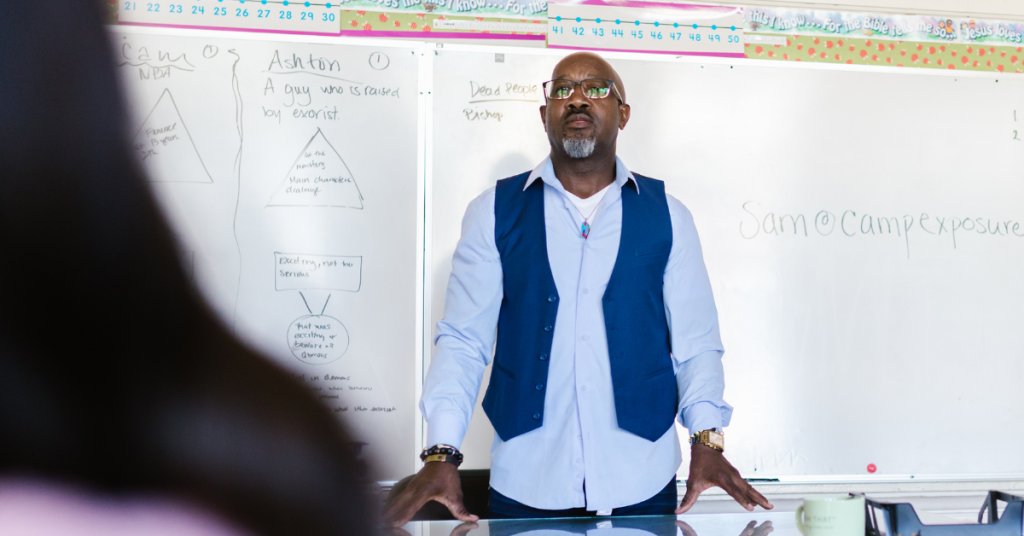
Mr Adebayo rebuilt his programme after that examination cycle. He retired his answer-focused drilling sessions and introduced the why rule across every topic. He tested variations before moving to new concepts and used EdSofta’s topical sets to expose his students to concept reframing weekly.
His students stopped asking “have we seen this question before?” And started asking “what principle is this question testing?”
That shift in question, from recognition to reasoning, is the entire goal. Build it in your classroom. Stop preparing answer collectors and build problem solvers. Your students will carry that thinking into the examination hall, into university, and into every challenge their future places in front of them.