
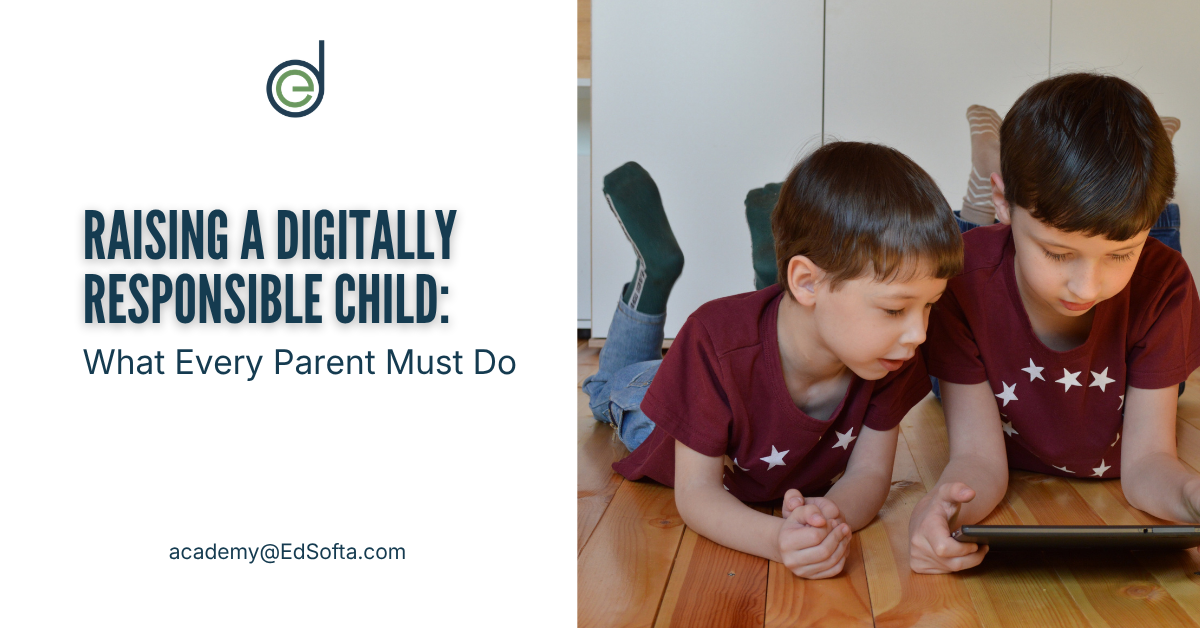
Raising a Digitally Responsible Child in a Connected World
Raising a digitally responsible child is one of the most urgent parenting challenges of the modern era. Picture this: Liam is chatting with someone he met in an online game three days ago. This person knows his first name, his age, and the city where he lives. Liam shared all of it willingly because the conversation felt friendly, and nobody told him it shouldn’t.
This scenario plays out in homes across the US, UK, Canada, and Nigeria every single day. Children are online earlier, for longer periods, and with less supervision than any previous generation. According to a 2024 report by the Internet Watch Foundation, one in three children aged 8 to 13 has encountered potentially harmful content or contact online without their parents’ knowledge. That statistic should stop every parent reading this cold.
The good news is this: digital responsibility is a parenting and education opportunity. And it starts with deliberate, consistent conversations, beginning tonight.
Raising a Digitally Responsible Child Starts With Protecting Personal Information
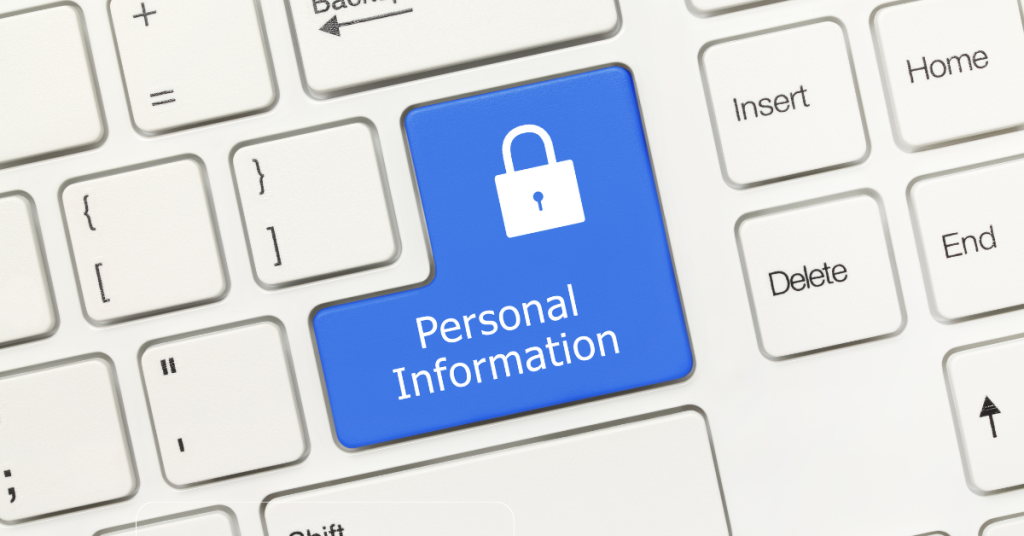
Most children share personal information online without any awareness of the risk. They don’t share carelessly out of defiance. They share because nobody clearly explained what personal information actually means in a digital context.
Start that explanation today. Sit with your child and define the boundaries together. Passwords belong to them alone, not to friends, classmates, or online contacts. Home addresses, school names, and daily routines stay completely offline. Personal photos never go to people they haven’t met face-to-face.
Teaching Your Child What Belongs Online and What Doesn’t
Make this conversation specific rather than general. Pull up your child’s favourite game or app together. Point to the profile section. Ask: “What would happen if a stranger read everything here?” That question shifts the conversation from abstract warning to concrete awareness immediately.
Furthermore, teach strong password habits early. A child who creates a complex, unique password for every account builds a security habit that protects them for life. Use a simple rule your child can remember: never use a name or a birthday, always use a mix of letters and numbers. Practice it together until it becomes automatic.
Raising a Digitally Responsible Child Means Teaching Safe Browsing Habits
The internet rewards curiosity. That is precisely what makes it both brilliant and dangerous for young minds. Children click links enthusiastically, download apps impulsively, and follow recommendations without questioning where those recommendations lead.
Your job is to build a mental filter.
Helping Kids Recognise Warning Signs Online
Teach your child three reliable warning signs that something online deserves adult attention.
- First, urgency: any message that says “act now” or “you’ve been selected” is almost certainly manipulative.
- Second, requests for personal details from unfamiliar sources.
- Third, content that feels exciting but somehow wrong, that instinct deserves respect, not dismissal.
Establish a simple household rule: before downloading any app, clicking any unfamiliar link, or responding to any unexpected message, ask a parent first. Frame this rule as a team approach rather than a restriction. “We check together” lands very differently from “you’re not allowed.” Children who feel trusted are far more likely to ask than children who fear punishment.
Raising a Digitally Responsible Child Requires Addressing Cyberbullying Directly
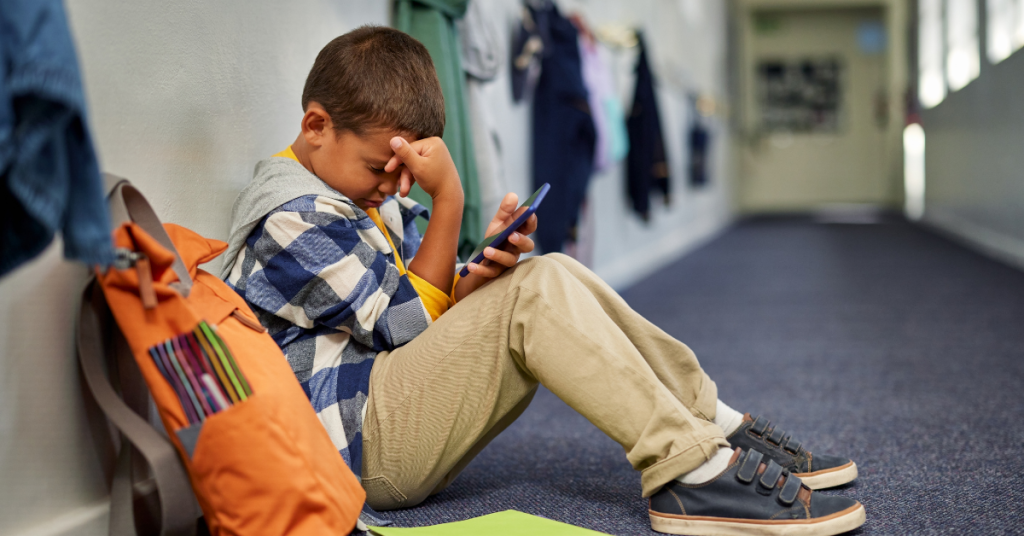
Cyberbullying is not a teenage problem. It begins in primary school. Children as young as eight encounter mean comments, exclusion tactics, and targeted harassment through gaming platforms, messaging apps, and social tools. Many never tell a parent because they fear losing device access entirely.
Break that fear deliberately. Make it clear that reporting a problem never results in losing their device. Silence is the only response that makes cyberbullying worse.
Teaching Kids to Respond, Report, and Reach Out
Teach your child a three-step response to cyberbullying: stop engaging, save the evidence, and tell a trusted adult immediately. Role-play this sequence at home so it becomes instinctive rather than theoretical. Children who practise a response in a safe environment execute it far more confidently under real pressure.
Equally important, teach your child that kindness online carries real weight. Every comment, message, and reaction either builds or damages another person’s experience. A child who understands this becomes a genuinely positive presence in every online space they inhabit.
Also read: The 5-Step Problem-Solving Framework for Your Kids
The Digitally Responsible Child You Raise Today Becomes Tomorrow’s Confident Leader
Liam’s parents had that conversation the following evening. They set boundaries together, created a family agreement about online sharing, and established the “check together” rule for downloads and new contacts. Within two weeks, Liam flagged a suspicious message to his mother on his own, completely unprompted.
At EdSofta Academy, children aged 7 to 13 develop digital skills inside a structured, supervised environment that embeds responsible online habits from day one. They create, collaborate, and build with safety and accountability woven into every session.
Start the conversation tonight. Then give your child an environment where digital responsibility grows naturally. Enrol them at EdSofta Academy and raise a child who navigates the digital world with confidence, clarity, and genuine character.
One Response