
Critical thinking is the single most overlooked skill in Nigerian secondary education today. Meet Mr Okafor. He teaches Government at a busy secondary school in Enugu. Every Friday, he runs a two-hour UTME drill session. His students complete past questions, mark their work, record their scores and go home.
Three weeks before the 2026 examination, one of his brightest students, Adaeze, sat with a past economics question. She had memorised every definition in her textbook and completed forty practice sets, yet she stared at a question on fiscal policy applications and felt completely at a loss. The question didn’t ask her to recall a definition; it asked her to think.
Adaeze’s struggle was a reasoning problem, and Mr Okafor’s Friday drills, however consistent, had never trained her to reason under pressure. Across Nigeria, thousands of students sit in exactly Adaeze’s position every examination cycle. They practise relentlessly but still underperform. The gap between practice and performance is almost always a critical thinking gap.
Why Critical Thinking in UTME Preparation Outperforms Rote Learning
Memorisation produces one outcome reliably: recognition. A student who memorises recognises familiar questions and recalls stored answers quickly. That skill has genuine value. However, JAMB examiners deliberately design questions to test beyond recognition. They embed qualifiers, reframe familiar concepts in unfamiliar contexts, and reward reasoning, not retrieval.
According to a 2024 report by the Nigerian Educational Research and Development Council, students who demonstrated analytical question-reading skills outperformed purely memorisation-trained peers by an average of 31 points in UTME scores. That margin rarely reflects content knowledge differences. It almost always reflects thinking skill differences.
Furthermore, the stakes extend far beyond UTME. University education operates on an entirely different intellectual demand. Lecturers expect students to defend arguments, solve novel problems, and apply knowledge across contexts. A student who enters university with only memorisation skills faces an immediate and painful adjustment. A student who enters with critical thinking habits adapts, contributes, and thrives from the very first semester.
Why Correct Answers Are the Wrong Target
Most classroom practice sessions set the wrong goal. Teachers celebrate correct answers while students chase correct answers. However, a correct answer reached through guesswork teaches nothing durable. A wrong answer examined thoroughly teaches everything.
Shift your classroom culture immediately. Make the reasoning process more important than the result. When a student answers incorrectly, ask: “Walk me through how you read that question.” That single prompt reveals more about a student’s thinking gaps than ten marked scripts ever could.
Read more here: Lessons from UTME 2026: Revolutionising Classroom Strategy
How Teachers Can Build Critical Thinking in UTME Preparation Sessions

Transforming your practice sessions requires deliberate restructuring, not more hours, but smarter hours. These three approaches produce measurable thinking improvements within one academic term.
Teach Question Anatomy Before Answer Selection
Before your students attempt any answer option, train them to dissect the question itself. What subject area is this question actually testing? What would a wrong interpretation look like?
Spend the first ten minutes of every practice session on two or three questions exclusively. Do not rush to answers. Discuss what the examiner built into the question construction. Students who understand how questions are designed stop being surprised by difficult ones.
Use Mistakes as the Main Teaching Material
Wrong answers carry more instructional value than correct ones. After every practice session, select the three most commonly missed questions in your class. Build your next lesson entirely around those questions. Do not simply provide the correct answer. Walk through every wrong option and explain precisely why each one fails.
This approach trains students to evaluate options rather than guess between them. It builds the elimination logic that separates average UTME scores from outstanding ones. It also shows students that mistakes are not endpoints but entry points into deeper understanding.
Connect Concepts Across Subject Lines
UTME questions frequently test conceptual connections that single-subject teaching never establishes. A Biology question may require mathematical reasoning. A Literature question may demand historical context. Train your students to think across subject boundaries deliberately.
At EdSofta, the UTME practice platform builds this cross-subject reasoning directly into its diagnostic structure. It tracks thinking patterns, identifying which students guess consistently, which struggle with qualifier words, and which avoid certain topic areas entirely. That data gives teachers a precise, actionable picture of every student’s reasoning gaps before examination day arrives.
The Teacher Who Builds Thinkers Wins Every Cycle
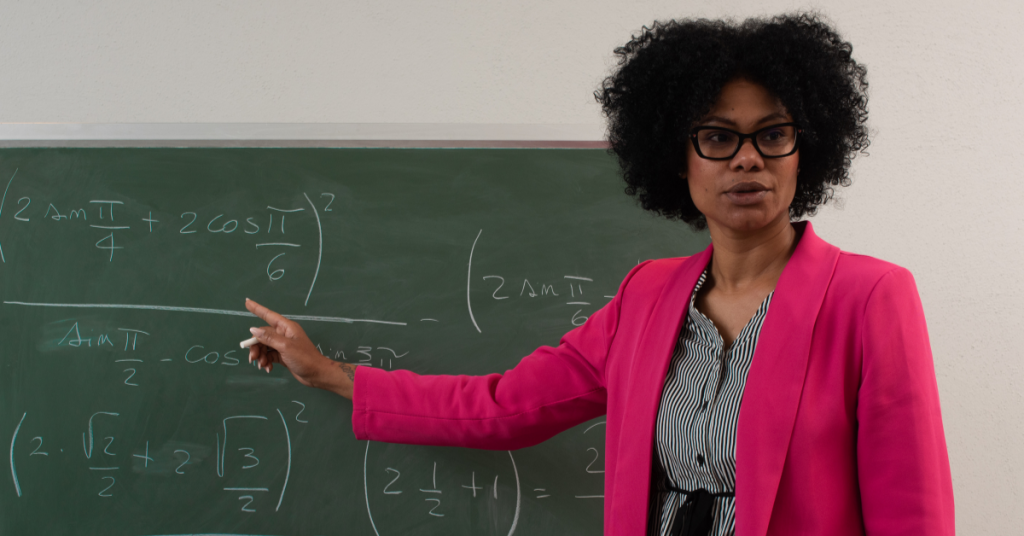
Mr Okafor changed his approach in the second term. He replaced answer-chasing drills with structured reasoning sessions and started his Fridays with question anatomy discussions. He built lessons around his students’ most common mistakes. By March, Adaeze scored 287.
She learned to think through what she already knew. That transformation is available to every student in your classroom. Start building thinkers today, not just test-takers. Integrate the EdSofta UTME App into your weekly practice sessions and give every student the reasoning foundation that turns preparation into genuine performance.